
 Kendoshi
Working together – voluntarily.
Kendoshi runs alone in your iCloud –
or connected to a Kendoshi server you run yourself.
Then projects become shared, tasks get an owner,
and comments sit under every task.
Team mode is optional · Not required to use the app · There is no hosted service from the developer
You decide on first launch.
The mode can be switched later. Team mode is optional.
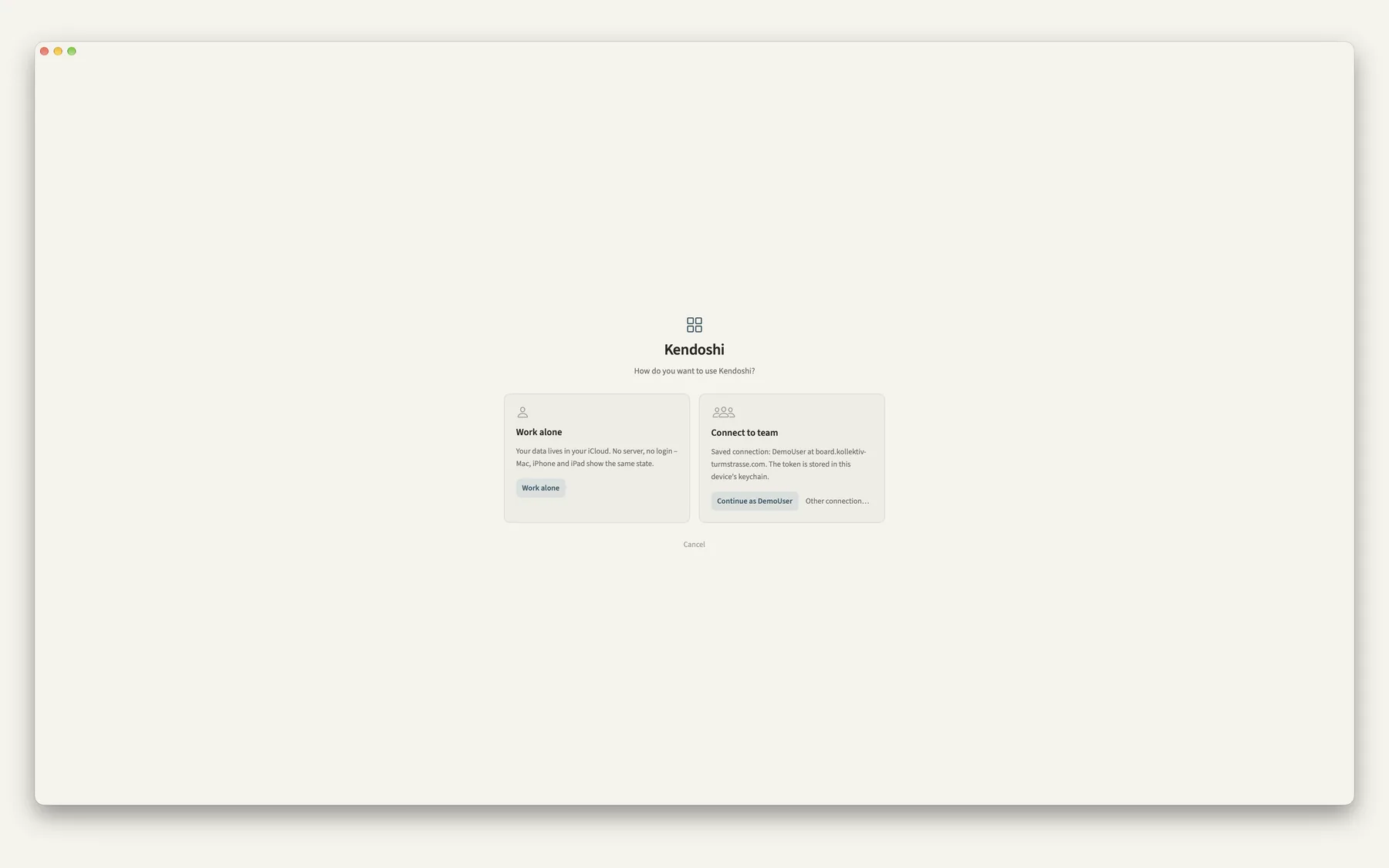
Work alone
Everything lives on your device and in your private iCloud database. No login, no server, no configuration. Mac, iPhone and iPad sync via CloudKit. Your personal area stays private even inside a team.
Connect to team
You enter the address of your Kendoshi server and sign in. From then on the team projects live on that server, not in iCloud.
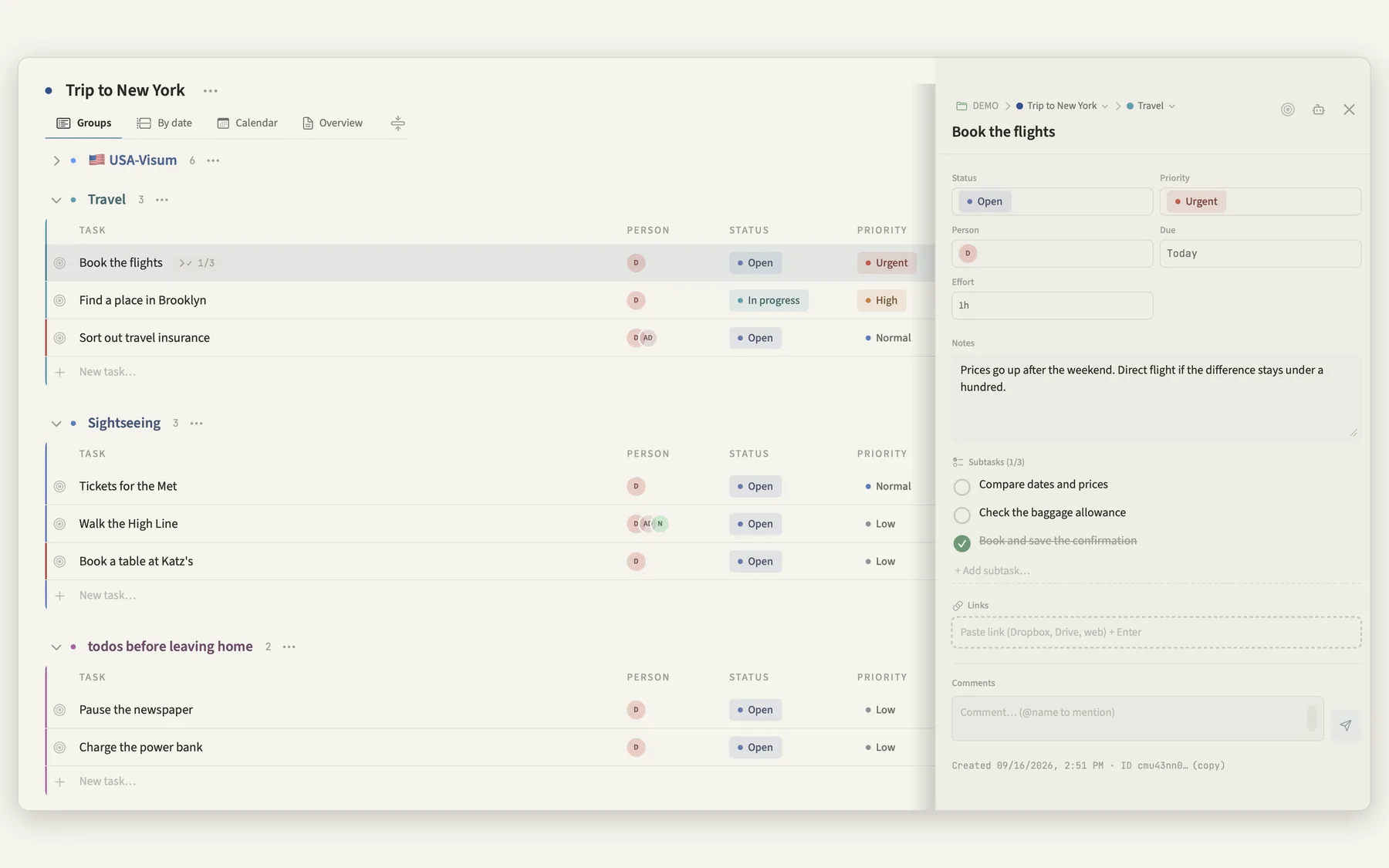
Who does what – and by when.
Every task has one person responsible and several collaborators, visible as small circles in the row. Comments sit in the detail panel, mentions with @name are highlighted in colour.
Roles
Admin or member. Admins create projects and folders and control who sees which project.
Invitations
One link per person, generated in the settings. No subscription, no seats anyone has to unlock.
Access per project
Folders and projects are shared individually. What isn't shared doesn't appear in the sidebar.
Team wiki
Shared pages with formatted text in folders – everyone reads, admins write.
Team mode needs its own Kendoshi instance, on a machine in the studio or at a provider of your choice. It ships as a ready-made Docker image: two files, one command, and the server runs. That way the team data also stays where you want it. There is no hosted service from the developer.
What set Kendoshi off was a subscription invoice that bore no relation to what a small team actually used. That is why there is no bill per person, per month here.
A server you control.
Running the server is your responsibility: availability, updates, backups, data protection towards your team
Alone is enough too.
Kendoshi was built for one person first and extended to teams afterwards, not the other way round. Nothing on this page has to be set up before you start.